
In healthcare facilities, hygiene, safety, and durability are a must. Flooring is crucial for keeping spaces sterile by ensuring smooth daily operations and by providing safe surfaces for patients, staff, and equipment. Because every step, trolley movement, or cleaning routine affects the floor’s performance and lifespan, hospitals and clinics choose their flooring carefully.
On the other hand, traditional ceramic tiles are common because they have drawbacks like grout maintenance, risk of cracking, and challenges in maintaining full hygiene. Homogeneous vinyl flooring offers a better solution by providing durability, seamless installation, chemical resistance, and reliable performance. Its strength, hygienic surface, and design flexibility make it perfect for busy medical environments.
In this article, we will explore why medical facilities prefer homogeneous vinyl flooring over traditional tiles. It also explains how this flooring improves hygiene, safety, durability, comfort, and long-term cost efficiency in healthcare environments.
Medical facilities prefer homogeneous sheet vinyl because it is seamless. Unlike individual tiles joined with grout, vinyl sheets create a continuous surface with no gaps. This reduces places for bacteria, dirt, and fluids to gather by keeping the environment cleaner and more hygienic.
Grout lines in tile floors can trap moisture and germs, and even frequent cleaning may not fully sanitize them, especially in busy areas like ICUs and operating rooms. Vinyl sheets provide a seamless surface that is easy to clean and disinfect by reducing the risk of contamination and maintaining a hygienic environment.
Vinyl sheets can have coved edges that curve up the wall by eliminating corner joints where dust and contaminants gather. This keeps all surfaces hygienic, even in critical hospital areas.
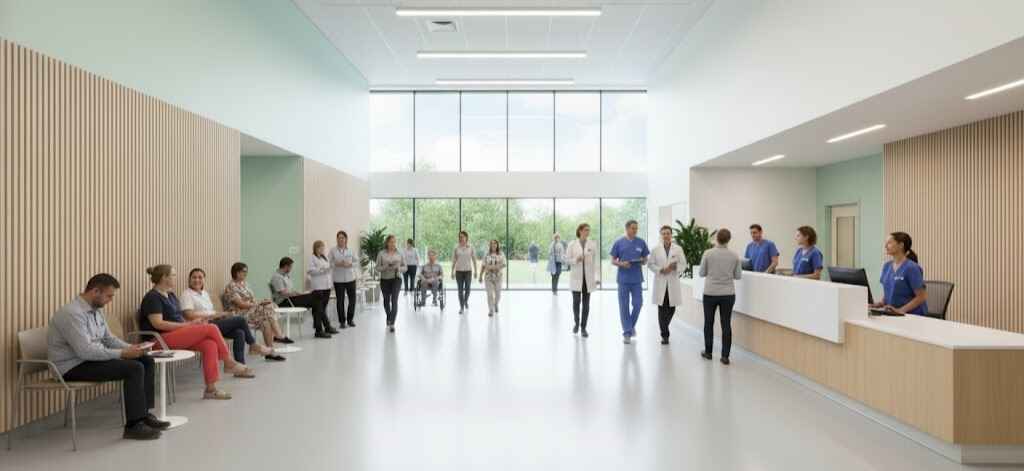
Medical facilities use cleaning agents, disinfectants, and chemicals every day. Homogeneous flooring resists damage from these substances and remains durable. In contrast, tiles can discolor or weaken over time, particularly in grout areas.
This resistance lets hospital cleaning teams maintain strict hygiene without damaging the flooring. Vinyl sheets also resist stains from spills like medications, bodily fluids, and disinfectants by keeping the environment clean and professional.
Healthcare facilities see constant traffic from patients, staff, and equipment. Trolleys, wheelchairs, hospital beds, and medical machinery move continuously through corridors and wards. Tiles can crack under this pressure, creating uneven surfaces that pose safety risks.
Homogeneous vinyl flooring is made from a uniform material throughout its thickness by giving it consistent strength and durability. It absorbs impacts better than ceramic tiles and resists cracking or chipping under heavy loads.
This long-term durability lowers maintenance and replacement costs. Hospitals and clinics can operate without frequent repairs or floor downtime by making vinyl sheets a practical and cost-effective option.
Normally it homogeneous vinyl sheet can last 20 to 50 years in hospital applications.
Safety is crucial in healthcare settings. Vinyl sheet flooring is naturally slip-resistant, even when wet, helping prevent accidents in corridors, patient rooms, and treatment areas. In contrast, tiles can become slippery when exposed to water or cleaning solutions, posing a risk to both patients and staff.
Vinyl flooring also provides a slightly cushioned surface by making it more comfortable to walk or stand on for long periods. Nurses, doctors, and cleaning staff spend hours on their feet, and the softer surface helps reduce fatigue and joint strain. This is particularly beneficial in high-activity areas like ERs and nursing stations.
Feature | Vinyl Sheet Flooring | Tiles |
Surface | Seamless, no gaps | Multiple pieces with grout |
Hygiene | Easy to clean, bacteria-free | Grout may harbor bacteria |
Slip | Slip-resistant | Can be slippery when wet |
Durability | Impact-resistant, long-lasting | Prone to cracks and chips |
Comfort | Slightly cushioned | Hard and rigid |
Maintainance | Low, easy upkeep | High, grout needs cleaning |
Noise | Reduces echoes and sound | Hard surface, louder noise |
Hospitals and clinics need controlled noise levels to aid patient recovery and help staff focus. Hard tile surfaces amplify footsteps, wheeled equipment, and general movement by creating echoes and raising overall noise levels.
Vinyl sheet flooring absorbs sound more effectively by helping to reduce overall noise. This creates a calmer environment in patient wards, ICUs, maternity units, and consultation rooms. Lower noise levels also improve focus and efficiency for hospital staff.
Installing homogeneous vinyl is faster and less disruptive than tiling. Large sheets are laid directly on prepared subfloors by removing the need for individual tiles and grout curing. This allows hospitals to complete flooring installation with minimal disruption, avoiding long downtimes in critical areas.
Tiles require careful alignment, grout application, and curing, which can take several days or even weeks in large facilities. Mistakes or delays during installation can further extend the process by making tiles less practical for busy medical settings.
Vinyl sheets can be easily customized to fit curves, corners, and irregular layouts by ensuring a perfect fit without compromising hygiene. This flexibility allows hospitals to install flooring efficiently, even in complex or high-risk areas.
Homogeneous flooring comes in a variety of colors, textures, and finishes to match any medical space. Unlike rigid, uniform tiles, vinyl sheets can mimic natural patterns, soft tones, or subtle speckles by creating a welcoming and calming atmosphere. Patient wards, clinics, and waiting areas benefit from these aesthetic options by making the environment more comforting for patients.
The consistent color of vinyl sheets ensures that even with scratches or heavy foot traffic, the floor retains a uniform appearance. This durability is important in medical spaces, where clean, professional-looking floors help maintain a positive impression and reinforce the perception of hygiene.
The ability to customize designs, add coved edges, and install sheets seamlessly across rooms ensures that aesthetics do not compromise functionality. Healthcare spaces can achieve both beauty and practicality without sacrificing cleanliness or safety.
Maintenance of homogeneous vinyl is simple and cost-effective. Routine cleaning only requires mild detergents and mopping, as the non-porous surface prevents liquids and contaminants from seeping in. Unlike tiles, there is no need for extensive grout cleaning or frequent replacement, which helps reduce labor and supply costs.
The long-term durability of vinyl sheets lowers life-cycle costs. Hospitals benefit from fewer repairs, less replacement material, and minimal downtime, resulting in reduced operational expenses.
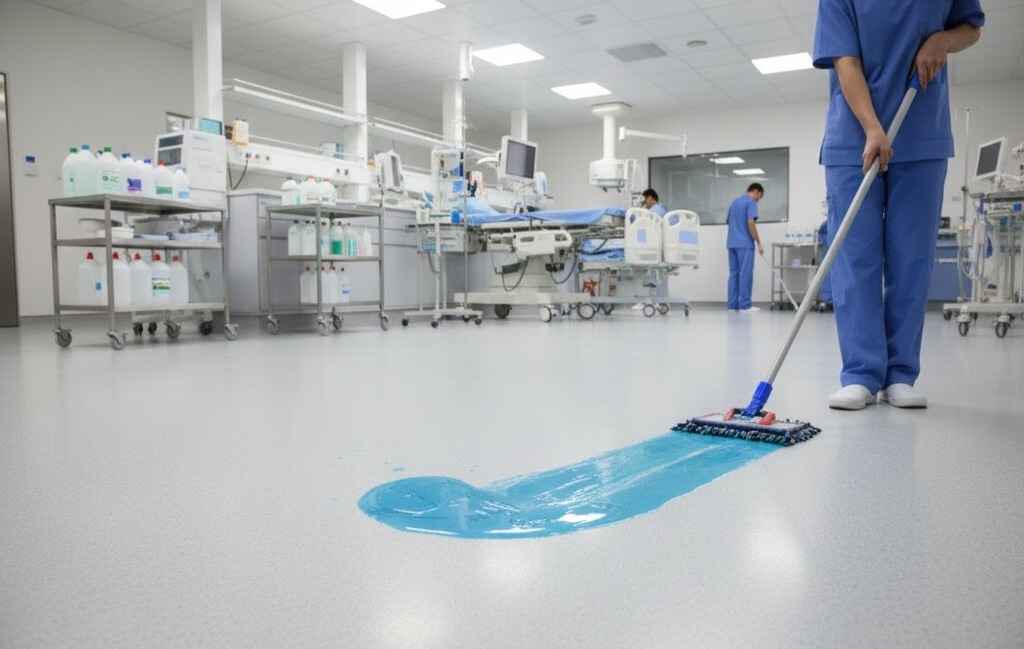
Medical facilities regularly use disinfectants, sterilization solutions, and chemical cleaning agents to maintain hygiene. Over time, tiles can fade, weaken, or get damaged, especially at grout lines.
Homogeneous flooring is designed to resist chemicals and cleaning agents without losing its strength or appearance. Its non-porous surface keeps spills and cleaning solutions on top by making them easy to clean.
This chemical resistance makes vinyl sheets ideal for operating rooms, laboratories, pharmaceutical prep areas, and emergency units. The flooring can withstand constant cleaning without fading or losing performance by keeping the environment safe and sterile.
Hospital staff spend long hours on their feet, walking, pushing trolleys, and performing critical tasks. Homogeneous vinyl flooring provides slight cushioning by reducing fatigue and supporting ergonomic comfort. Unlike hard tiles, it helps prevent strain on joints and feet during long shifts.
Safety is improved with slip-resistant vinyl flooring. Wet corridors, patient rooms, and surgical areas are less risky compared to tiles, which can become slippery when exposed to water or cleaning solutions. These features help protect both patients and staff from accidents.
Medical facilities need controlled noise levels to support patient recovery, reduce stress, and help staff focus. Ceramic tiles often amplify sound by creating echoes from footsteps, wheelchairs, and moving equipment.
Vinyl sheet flooring reduces noise and echoes by creating a calmer environment. Quieter spaces improve patient comfort and rest, and help staff stay focused and efficient by boosting overall hospital performance.
Although homogeneous vinyl flooring may cost more initially than basic tiles, its long-term savings make it a worthwhile investment. Lower maintenance, minimal replacement, fewer repairs, and quicker cleaning all help reduce operational costs over time.
Tiles often need grout repairs, broken piece replacements, and extra cleaning products. Over time, these recurring costs add up by making tiles less economical for busy healthcare environments.
Vinyl sheets, with their durability and long lifespan, offer a lower and more predictable total cost of ownership. Hospitals can plan budgets efficiently by keeping flooring reliable without unexpected expenses.
Sustainability is an important concern for modern medical spaces. Many homogeneous vinyl flooring products are now made with low-VOC materials by improving indoor air quality and reducing chemical exposure for staff and patients.
Some vinyl flooring can be recycled at the end of its life by reducing waste and promoting eco-friendly practices in healthcare.
Different areas in a hospital or clinic have specific flooring needs. Operating rooms require seamless, easily disinfected surfaces. Laboratories need chemical-resistant flooring, while patient rooms and waiting areas benefit from comfort, color, and aesthetic appeal.
Homogeneous vinyl flooring is adaptable to these different needs. With choices for thickness, anti-slip properties, and antimicrobial coatings, the same material can be used throughout the facility while meeting the functional requirements of each area.
This adaptability ensures consistent maintenance, aesthetics, and performance. It also allows facility managers to standardize flooring throughout the building by making training and cleaning routines simpler.
Homogeneous flooring is ideal for medical facilities, offering excellent hygiene, durability, and safety. Its seamless surface prevents bacteria buildup, and chemical resistance makes maintenance easy. The flooring provides comfort and slip resistance for staff and patients while reducing noise. With long-lasting performance and low maintenance costs, vinyl sheets are a practical and stylish choice for modern hospitals and clinics.
Answer: It has a seamless and non-porous surface that resists bacteria, chemicals, and heavy wear, and is easy to clean.
Answer: Yes, homogeneous vinyl sheets resist disinfectants, sterilization agents, and other cleaning chemicals used in medical settings.
Answer: Absolutely. It provides slip resistance, absorbs impact, and has a slightly cushioned surface, helping reduce accidents and staff fatigue.
Answer: With proper installation and care, it can last 15–20 years or more, keeping its durability, appearance, and hygiene.
Answer: Yes, it absorbs sound better than hard tiles, reducing echoes from footsteps, trolleys, and equipment, and creating a calmer and more healing environment.
Copy right by Longda China