
Modern interior spaces require flooring that combines performance with visual appeal. Designers, architects and facility managers now consider how flooring shapes the overall atmosphere rather than just its durability. Flooring is no longer just a surface to walk on. It has become an important design element that influences comfort, branding and user experience.
Heterogeneous vinyl flooring has become a preferred choice for commercial and institutional projects because it delivers both style and performance. Its layered design creates visually engaging surfaces while maintaining strength and durability. This balance makes it ideal for spaces that require creative design along with long-lasting reliability.
In this blog, we will explain why heterogeneous vinyl flooring offers greater design flexibility than other flooring options. We will also cover its layered structure, visual possibilities, customization options and how it supports modern design needs across different environments.
Heterogeneous vinyl flooring consists of several layers each with a clear purpose. The top wear layer protects the surface, the printed design layer enhances its appearance and the backing layers ensure stability. This design allows designers to create visually appealing spaces without reducing performance.
Because the design layer is separate from the wear layer, manufacturers can freely experiment with colors, textures and patterns. The visual design stays protected under a strong surface which helps it maintain its appearance for many years. This structure gives designers confidence to choose bold or subtle looks based on project requirements.
The layered structure also ensures consistent quality across large areas. Even complex designs remain uniform throughout the floor which is important for commercial spaces that need a polished and professional finish.
Heterogeneous vinyl flooring can closely mimic the look of natural materials. Advanced printing technology lets surfaces resemble wood grains, stone textures or concrete finishes with great detail. This gives designers the beauty of natural materials without their limitations.
Natural materials often need high maintenance and may not perform well in areas prone to moisture. Vinyl alternatives offer similar visual impact with easier cleaning and better durability. This makes them ideal for healthcare, retail and education spaces.
Designers gain complete freedom to incorporate wood or stone visuals in areas where using real materials is impractical, while they create innovative and visually engaging spaces and maintain functionality and durability across different environments.
One of the main advantages of heterogeneous vinyl flooring is its wide range of colors and patterns. Designers can choose solid tones, gradients, natural textures or abstract visuals. This variety works well with both modern and classic interior styles.
Color consistency is important in large projects like hospitals, offices and schools. Heterogeneous vinyl keeps shades uniform across batches which helps prevent visual breaks in flooring layouts. This reliability supports accurate design planning.
Pattern flexibility also allows spaces to feel larger, calmer or more dynamic depending on the chosen design. Soft tones create a relaxed environment whereas bold patterns add energy to public areas.
Large areas often serve multiple functions within a single layout. Heterogeneous vinyl flooring allows designers to create visual zones without using physical barriers. Different colors or patterns can mark walkways, seating areas or work zones.
This zoning approach improves navigation and organization. It helps users naturally understand how to move through a space. Visual separation also enhances safety and comfort in busy environments.
Using flooring for design zoning reduces the need for extra signage or partitions. This keeps interiors clean and visually open while maintaining structure.
Choosing the right flooring depends on finding the right balance between style and function. The table below provides a clear comparison of key design features of heterogeneous vinyl and traditional flooring.
Design Aspect | Heterogeneous Vinyl Flooring | Traditional Flooring |
Color Options | Wide and customizable | Limited ranges |
Pattern Variety | High flexibility | Restricted designs |
Branding Support | Custom logos and themes | Rarely possible |
Visual Consistency | Strong across large areas | Often inconsistent |
Style Adaptability | Modern and classic | Style-specific |
It shows that heterogeneous vinyl provides greater design freedom, consistent visuals and versatile styling. It is an ideal choice for spaces that require both aesthetic appeal and long-lasting performance.
Open-plan spaces need flooring that appears continuous and cohesive. Heterogeneous vinyl flooring allows seamless installation with minimal visual breaks, enhancing the overall flow of the interior.
A smooth, unified floor helps spaces feel larger and more organized. It reduces distractions caused by joints or changes in materials and is especially important in offices, healthcare facilities and public buildings.
Seamless visuals also support hygiene and maintenance needs. Fewer joints mean fewer areas for dirt accumulation which improves cleanliness and appearance.
Many commercial projects need flooring that reflects brand identity. Heterogeneous vinyl flooring supports custom designs, logos and color schemes that match brand guidelines. This feature is especially useful for corporate offices, retail stores and public buildings.
Custom flooring reinforces visual identity throughout interiors. Logos can be incorporated directly into the floor, creating a strong first impression. Color coordination between flooring and other interior elements enhances overall design harmony.
This level of customization allows businesses to create unique spaces that feel intentional and professional. Flooring becomes part of the branding strategy rather than just a background element.
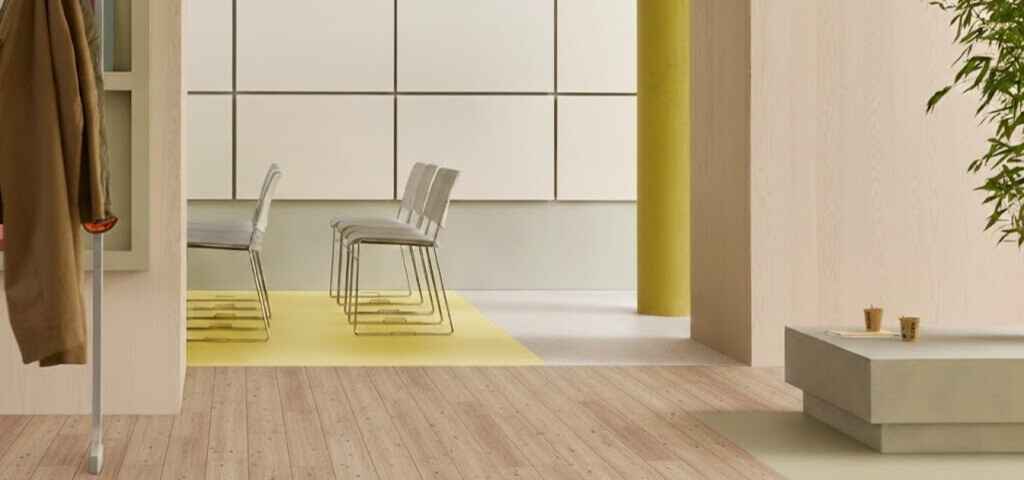
High-traffic areas often wear faster, which can affect appearance. Heterogeneous vinyl flooring is built to maintain its look even under heavy use, supporting long-term design consistency.
Designers can confidently use the same flooring across corridors, entrances and common areas. It resists fading and surface damage, preserving visual quality.
This durability ensures that design intent remains intact throughout the building’s lifecycle. Spaces continue to look professional without frequent replacement.
Heterogeneous vinyl flooring provides a balance between practical performance and visual appeal. Designers do not need to choose between durability and design flexibility, as both are achieved in a single solution.
This balance supports cost-effective decision-making. Projects benefit from long-lasting flooring that meets aesthetic goals. It is especially valuable in commercial spaces with strict performance requirements.
The ability to deliver style without sacrificing function explains why this flooring continues to grow in popularity and remains a top choice for modern commercial and public spaces.
Heterogeneous vinyl flooring allows designers to combine multiple patterns within the same layout. This flexibility supports creative designs without affecting performance or installation quality. Designers can use contrast to guide movement or highlight focal points.
This ability to mix designs helps spaces feel intentional rather than repetitive. It supports creativity while maintaining a professional and organized appearance.
Many modern buildings feature curved walls or irregular room shapes. Heterogeneous vinyl flooring adapts well to these layouts because of its flexible material structure. This allows the flooring to follow architectural details accurately.
Designers do not need to simplify layouts due to flooring limitations. The material bends and fits smoothly around corners and custom shapes, resulting in a more refined and complete design.
The final appearance remains cohesive even in complex spaces. This adaptability makes the flooring ideal for innovative architectural concepts.
Heterogeneous vinyl flooring adapts easily to different design styles. It fits minimalist interiors with clean lines and neutral tones and also works well in traditional spaces that require warmth and classic patterns.
This flexibility allows designers to use the same flooring across projects with different themes. It supports creativity without limiting design choices and simplifies material selection for multiple locations.
The ability to align with evolving trends ensures interiors remain visually relevant over time. Designers can refresh aesthetics without changing the flooring type.
The printed layer in heterogeneous vinyl flooring adds visual depth that flat materials cannot achieve. Designs appear more realistic and detailed which improves the overall look of interiors.
This depth enhances the perceived quality of a space. Interiors feel more engaging without the need for costly materials.
Some flooring materials lose their appeal quickly due to wear or fading. Heterogeneous vinyl flooring maintains its visual quality over time while keeping designs fresh even in demanding environments.
The protected design layer resists surface damage and discoloration, ensuring the original design remains visible for years. Spaces continue to look clean and professional.
This long-term visual stability adds value to projects. Designers can trust that their work will age gracefully.
Design trends evolve over time, but replacing floors can be disruptive. Heterogeneous vinyl flooring allows visual updates without major structural changes. New designs can be introduced during renovation cycles.
This flexibility allows facilities to stay current without high costs. Flooring updates become a design improvement rather than a construction challenge.
Brands with multiple locations need design consistency. Heterogeneous vinyl flooring ensures uniform visuals across different sites, so each location reflects the same brand image.
Manufacturers provide consistent design batches, helping maintain the same look everywhere. Designers can replicate layouts accurately across regions, supporting long-term brand recognition.
Consistent flooring design reinforces identity and professionalism. Visitors experience the same visual quality at every location.
Wayfinding is an important design element in large buildings. Heterogeneous vinyl flooring provides contrast without causing visual overload. Designers can guide movement subtly using changes in color and pattern.
This approach improves user experience without adding signs or barriers. Flooring becomes a silent guide that supports smooth movement.
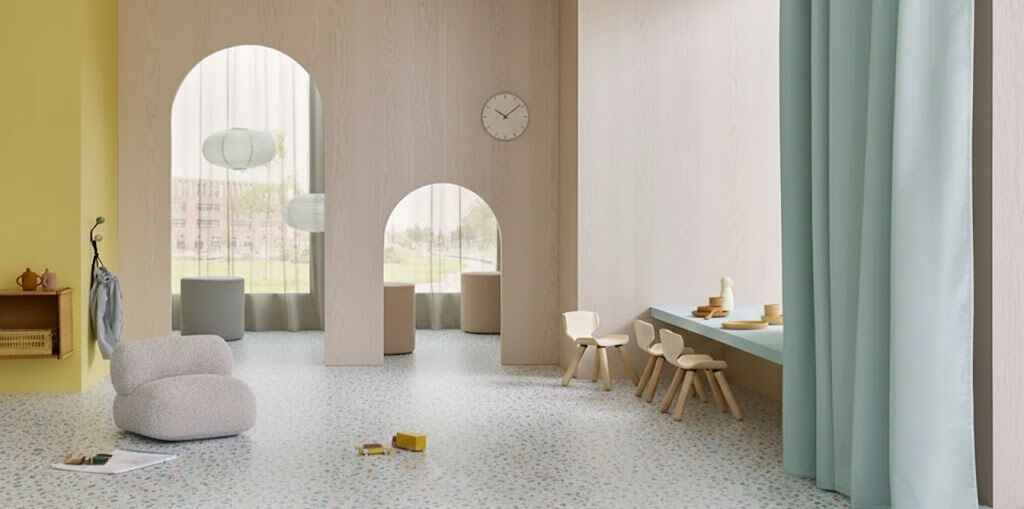
Educational and healthcare spaces need calm and organized designs. Heterogeneous vinyl flooring meets these requirements by offering controlled colors and functional patterns. These designs help create a focused and comfortable atmosphere.
Designers can use soft tones for classrooms or patient rooms. Clear visual pathways can be established in corridors using color cues, improving wayfinding and reducing confusion.
The flooring supports both emotional comfort and practical needs. This balance is crucial in sensitive environments.
Heterogeneous vinyl flooring stands out as a design-focused solution because it allows designers to create visually engaging spaces without compromising performance. Its layered structure, advanced printing technology and flexible installation options enable interiors to reflect modern creativity, branding needs and functional planning. This makes it suitable for a wide range of environments where appearance plays an important role.
Beyond visual appeal, this flooring type supports long-term design value. It maintains consistency, adapts to changing layouts and ages well over time. These qualities help projects remain attractive and relevant for years. For spaces that require both style and reliability, heterogeneous vinyl flooring offers a balanced and forward-thinking solution.
Longda Flooring is the largest commercial vinyl sheet flooring manufacturer in China. Currently we have 300+ colors stock, and custom made design & printing is always available in our factory. Which means no matter what is your design, we can make the flooring with it.
Answer: Heterogeneous vinyl flooring has a separate printed design layer that provides greater freedom in colors, patterns and textures while keeping the surface protected and durable.
Answer: Yes, it works well with modern layouts by providing clean visuals, seamless finishes and customizable patterns that match contemporary design trends.
Answer: It is highly suitable because it provides visual consistency, strong durability and flexible design options across large and high-traffic areas.
Answer: Designers can use color changes and patterns to define zones, guide movement and improve layout clarity without adding physical barriers.
Answer: The protected design layer helps resist wear and fading while maintaining the floor’s original appearance even in demanding environments.
Copy right by Longda China