
Hospitals operate around the clock and must provide a safe, hygienic and comfortable environment for patients, healthcare professionals and visitors. Every area of a hospital plays an important role in supporting efficient healthcare services and flooring is one of the most essential elements. Hospital floors must withstand constant foot traffic, the continuous movement of medical equipment and frequent cleaning with strong disinfectants. Choosing the wrong flooring can create safety risks, increase maintenance costs and lead to frequent replacements.
Homogeneous vinyl sheet flooring has become one of the most excellent flooring solutions for modern healthcare facilities because it is designed to meet the demanding conditions of hospitals. Its durable construction, hygienic surface and easy maintenance help healthcare facilities maintain clean, safe and healthy environments while reducing long-term maintenance requirements. Unlike many other flooring options, it provides consistent performance and long-lasting durability even under heavy daily use.
In this blog, we will explain the most common hospital flooring mistakes and how homogeneous vinyl flooring solves these challenges. We will also discuss its hygiene benefits, durability, maintenance advantages, safety features and long-term value to help healthcare facilities make better flooring decisions.
One of the most common mistakes hospitals make is choosing flooring based only on its purchase price. At first, selecting a lower-cost flooring option may seem like a good way to reduce the project budget. However, this decision often leads to higher costs over time because low-cost flooring may not be designed to withstand the demanding conditions of healthcare facilities. It can wear out quickly, become damaged by heavy foot traffic and require frequent repairs or replacement.
Hospital flooring should always be evaluated based on its total cost of ownership rather than its initial purchase price. Long-term expenses such as maintenance, cleaning, repairs, downtime and replacement all contribute to the overall investment. Flooring that requires constant maintenance can increase operating costs and cause unnecessary disruptions to daily hospital operations.
Homogeneous vinyl flooring provides an excellent solution because it is designed for long-term performance. Its uniform construction offers excellent durability and helps resist daily wear and tear. Although the initial investment may be higher than some other flooring materials, its long lifespan and low maintenance requirements help hospitals reduce overall costs over time, making it a more cost-effective flooring solution.
Maintaining excellent hygiene is essential in every hospital because patients, healthcare professionals and visitors depend on a clean and safe environment. Flooring plays a vital role in supporting infection control. When hospitals choose flooring that is difficult to clean or allows moisture to penetrate, maintaining proper hygiene becomes much more challenging.
Some flooring materials contain joints, gaps or porous surfaces where dirt, dust and microorganisms can accumulate. Even with regular cleaning, these areas can be difficult to disinfect completely. Over time, damaged flooring surfaces can also trap contaminants, reducing the effectiveness of hospital cleaning procedures.
Homogeneous vinyl flooring is designed to meet strict hygiene standards. Its smooth and non-porous surface prevents moisture absorption and makes routine cleaning easier and more effective. When installed with heat-welded seams, it creates a seamless flooring surface with very few areas where dirt and bacteria can accumulate. This helps hospitals maintain cleaner environments while supporting effective infection prevention and hygiene management.
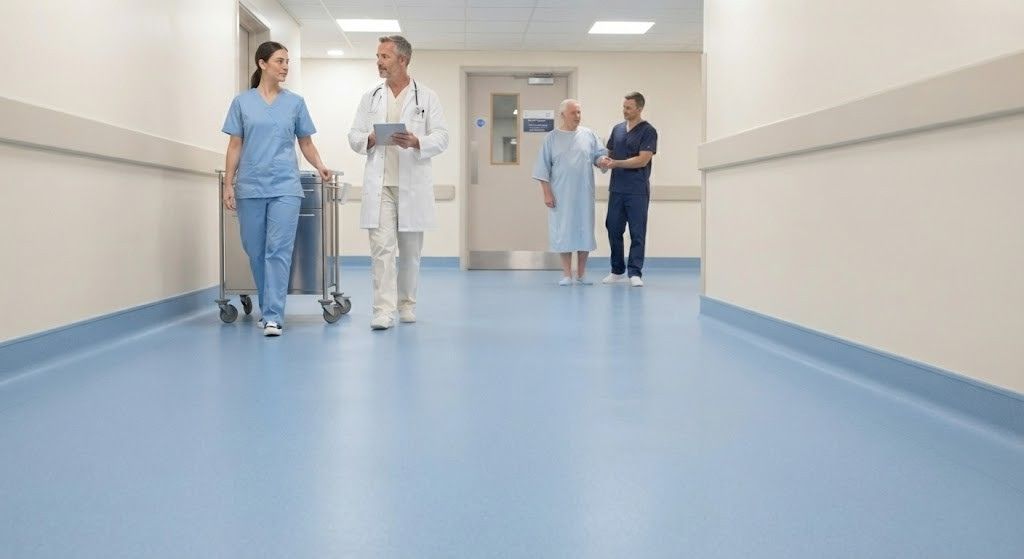
Hospitals operate continuously throughout the day and night. Patients, visitors, doctors, nurses and support staff move through corridors, treatment rooms and waiting areas at all hours. At the same time, hospital beds, stretchers, wheelchairs and medical carts place constant pressure on flooring surfaces. These demanding conditions require flooring that delivers excellent performance every day.
Flooring that is not designed for heavy commercial traffic can quickly develop scratches, dents, worn areas and surface damage. As the flooring begins to deteriorate, its appearance declines and maintenance requirements increase. Frequent repairs can also disrupt hospital operations and increase maintenance costs. Homogeneous sheet vinyl is specifically designed for high-traffic environments. Because the material has the same composition throughout its entire thickness, it maintains its strength and appearance even after years of continuous use. Its durable construction helps preserve long-term performance while reducing repair and replacement costs, allowing hospitals to maintain a clean, professional and welcoming environment.
Hospitals use a wide range of disinfectants, cleaning agents and sanitation products every day to maintain a safe and hygienic healthcare environment. These chemicals are essential for infection control, but they can damage flooring materials that are not designed to withstand frequent exposure. Choosing flooring with poor chemical resistance can lead to discoloration, stains, fading and surface deterioration.
Chemical damage not only affects the appearance of hospital flooring but also reduces its lifespan. Damaged surfaces become more difficult to clean and may require costly repairs or complete replacement. This increases maintenance costs and causes unnecessary disruptions to hospital operations.
Homogeneous vinyl flooring provides excellent resistance to many commonly used hospital cleaning chemicals. It maintains its appearance and structural strength even after repeated cleaning and disinfection. This allows hospitals to follow strict cleaning routines without damaging the flooring, making it an excellent choice for demanding healthcare environments.
Safety should always be one of the highest priorities when selecting flooring for hospitals. Patients with limited mobility, elderly individuals, healthcare professionals and visitors all depend on safe walking surfaces. Floors can occasionally become wet during routine cleaning or because of unexpected spills, increasing the risk of slips and falls if the flooring does not provide adequate slip resistance.
Slip-and-fall accidents can result in injuries, additional medical treatment and operational challenges for healthcare facilities. They can also increase liability risks and negatively affect the overall patient experience. Choosing flooring with reliable slip resistance helps hospitals create a safer environment for everyone.
Homogeneous vinyl is available in slip-resistant options that improve walking safety while maintaining a clean and professional appearance. These surfaces provide better traction without making cleaning more difficult. By combining safety, hygiene and durability, homogeneous vinyl flooring helps hospitals reduce the risk of accidents while supporting efficient daily operations.
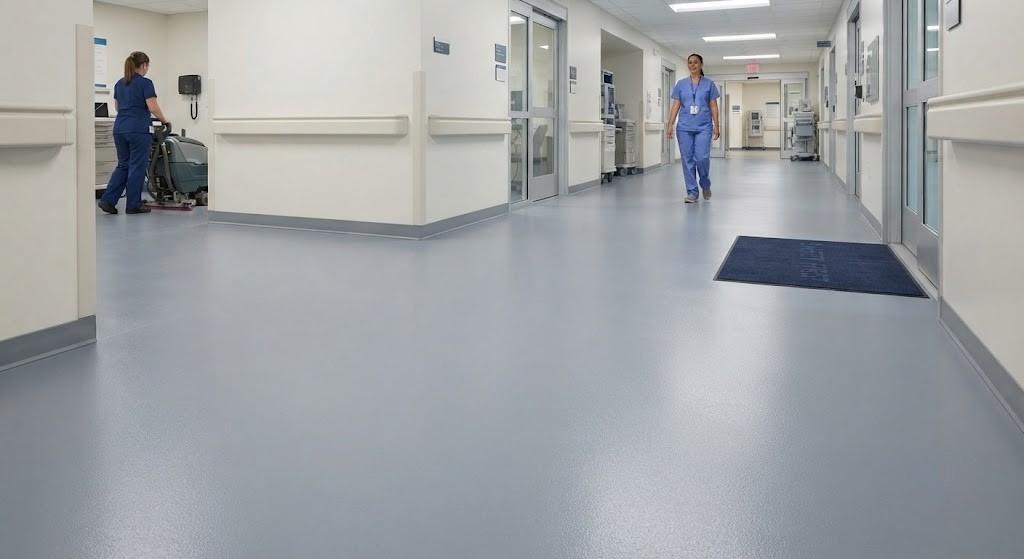
Selecting the right flooring becomes easier when hospitals understand the problems caused by poor flooring choices. The following table highlights common hospital flooring mistakes, the challenges they create and how homogeneous sheet vinyl provides practical solutions.
This comparison helps healthcare facilities understand why homogeneous vinyl flooring is a reliable choice for demanding healthcare environments.
Common Hospital Flooring Mistake | Problems It Creates | How Homogeneous Vinyl Flooring Solves It |
Choosing flooring based only on cost | Frequent repairs and higher long-term expenses | Provides a long service life and reduces the total cost of ownership. |
Ignoring hygiene requirements | Difficult cleaning and increased contamination risks | Its smooth, non-porous surface supports effective cleaning and disinfection. |
Installing flooring that cannot handle heavy traffic | Scratches, dents and early wear | Its uniform construction delivers outstanding durability under constant use. |
Selecting flooring with poor chemical resistance | Stains, discoloration and surface damage | It resists many healthcare cleaning chemicals and maintains its appearance. |
Overlooking slip resistance | Increased risk of slips and falls | Slip-resistant options improve walking safety while remaining easy to maintain. |
As shown in the table, many common hospital flooring problems can be prevented by selecting the right flooring solution from the beginning. Homogeneous vinyl flooring solves multiple challenges by offering excellent durability, hygiene, safety and easy maintenance. These qualities make it a dependable long-term flooring solution for modern healthcare facilities.
Hospitals operate around the clock and cannot afford unnecessary interruptions caused by flooring repairs. Every department depends on safe and reliable flooring to support patient care, staff movement and the transportation of medical equipment. Flooring that becomes damaged easily often requires frequent maintenance, creating inconvenience for both hospital staff and patients.
Small cracks, dents or worn areas may seem minor at first, but they can quickly develop into more serious problems if they are not repaired promptly. Damaged flooring can also create uneven surfaces that reduce safety and make cleaning more difficult. Frequent repairs increase maintenance costs and reduce the overall efficiency of hospital operations. Homogeneous vinyl flooring is designed to withstand the demanding conditions of healthcare environments without requiring constant repairs. Its durable and uniform construction helps resist daily wear and tear, reducing maintenance requirements. This allows hospitals to spend less time on flooring repairs and more time focusing on delivering high-quality healthcare services.
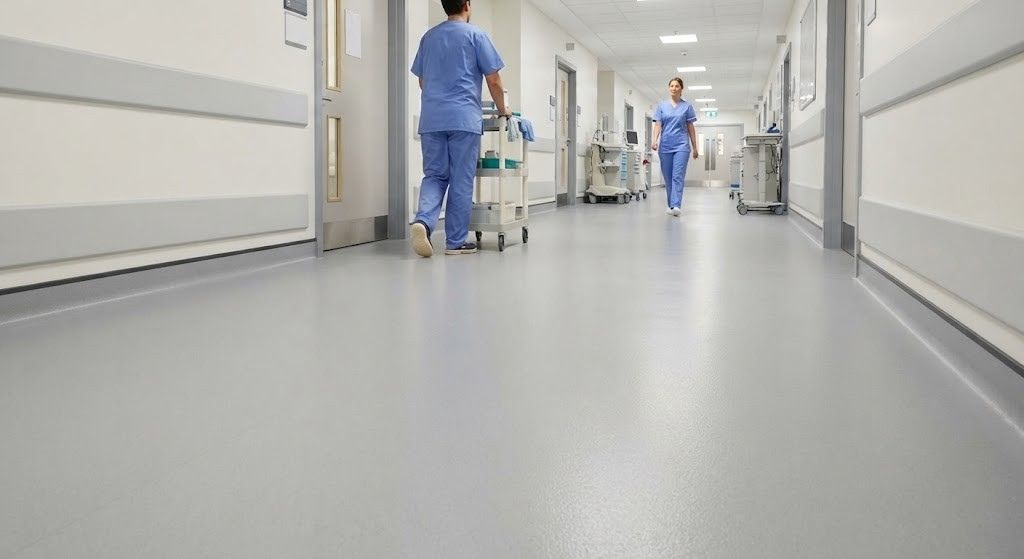
Hospitals are cleaned regularly throughout the day, making moisture resistance an essential flooring requirement. Water, cleaning solutions and accidental liquid spills are common in healthcare facilities. Flooring that absorbs moisture can swell, weaken or lose its performance over time.
Moisture-related damage often increases maintenance requirements and shortens the lifespan of the flooring. It can also affect hygiene if moisture becomes trapped beneath damaged flooring surfaces, creating conditions that are difficult to clean effectively.
Homogeneous vinyl flooring provides excellent moisture resistance because of its non-porous construction. It does not easily absorb liquids, helping maintain its strength and structural stability even in areas that require frequent cleaning. This makes it an excellent flooring solution for busy healthcare environments.
Many hospitals focus only on their immediate flooring needs without considering future operational requirements. As patient numbers grow and healthcare services expand, flooring must continue to perform under increasing daily demands. Choosing flooring without considering long-term performance can lead to early replacement, higher maintenance costs and unnecessary renovation expenses.
A long-lasting flooring solution should provide excellent durability, hygiene, safety and easy maintenance throughout its service life. Hospitals benefit from flooring that delivers consistent performance despite years of heavy foot traffic, frequent cleaning and the continuous movement of medical equipment.
Homogeneous vinyl sheet flooring is designed to meet these long-term requirements. Its durable construction, hygienic surface, excellent moisture resistance and low maintenance requirements make it an excellent investment for modern healthcare facilities. By addressing multiple flooring challenges at the same time, it helps hospitals reduce costs, improve operational efficiency and maintain a safe, clean and professional environment for many years.
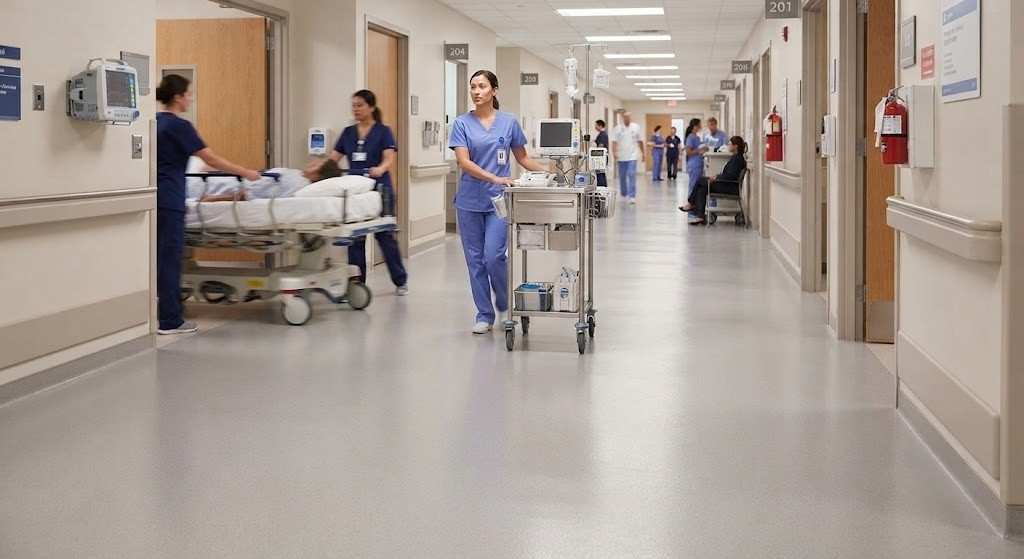
Homogeneous vinyl flooring is one of the most suitable flooring options for modern hospitals because it supports safety, hygiene, efficiency and long-term cost control. However, selecting the right flooring is an important decision as many common mistakes, such as focusing only on the initial cost, ignoring durability or choosing materials that cannot meet healthcare requirements, can lead to frequent repairs, increased maintenance and reduced performance. With excellent durability, easy maintenance, strong resistance to chemicals and moisture and hygienic properties, homogeneous vinyl helps maintain a clean, safe and professional environment while supporting the daily demands of hospital operations.
By understanding these common hospital flooring mistakes and choosing homogeneous vinyl sheet flooring, healthcare facilities can create safer, more efficient and cost-effective environments. Investing in the right flooring solution helps ensure reliable performance, reduced maintenance needs and better long-term value for many years.
Longda Flooring is the largest vinyl sheet flooring manufacturer in China. We fully understand for a good flooring in hospital, flooring quality is important, but installation and daily maintenance are important too, all these make a perfect hospital flooring.
Answer: Homogeneous vinyl sheet flooring is widely used in hospitals because it is designed to meet the demanding requirements of healthcare environments. Hospitals experience continuous foot traffic from patients, healthcare professionals and visitors, along with the regular movement of hospital beds, stretchers, wheelchairs and medical equipment. The flooring must also withstand frequent cleaning with disinfectants while maintaining its appearance and performance over time. Homogeneous vinyl flooring provides a durable, non-porous and easy-to-maintain surface that supports strict hygiene standards and long-term reliability. Its ability to combine durability, safety and simple maintenance makes it one of the most trusted flooring solutions for modern healthcare facilities.
Answer: The lifespan of homogeneous vinyl flooring depends on several factors, such as product quality, professional installation, daily traffic levels and regular maintenance practices. In healthcare facilities where the flooring is properly cleaned and maintained according to the manufacturer’s recommendations, homogeneous vinyl flooring can deliver reliable performance for many years. Its uniform construction allows the material to resist wear throughout its entire thickness, helping it maintain its appearance and structural strength even in high-traffic hospital environments. Due to its long service life, hospitals can reduce replacement frequency and achieve better long-term value from their flooring investment.
Answer: Yes, homogeneous vinyl flooring is considered one of the easiest flooring materials to clean and maintain in healthcare facilities. Its smooth and non-porous surface prevents dirt, dust and liquids from entering the material, making routine cleaning more effective. Daily sweeping and damp mopping, along with regular cleaning using approved healthcare disinfectants, are usually enough to keep the flooring clean and hygienic. Unlike some flooring materials that require special coatings or complex maintenance procedures, homogeneous vinyl allows efficient cleaning with minimal effort. This helps hospitals save maintenance time, reduce labour costs and maintain a clean and professional appearance throughout the facility.
Answer: Yes, homogeneous vinyl flooring is designed to withstand the continuous movement of heavy hospital equipment while maintaining its performance. Every day, hospital beds, wheelchairs, stretchers, medicine carts, mobile diagnostic equipment and other wheeled devices move across hospital floors. These activities create significant pressure on the flooring surface and require a material that can resist wear while maintaining structural stability. Homogeneous vinyl flooring is manufactured with the same material throughout its entire thickness, allowing it to deliver reliable performance under demanding conditions. This durability helps reduce scratches, dents and premature wear while supporting smooth equipment movement and reducing long-term maintenance requirements.
Answer: When selecting hospital flooring, healthcare facilities should consider more than just the initial purchase cost. Important factors include durability, hygiene, slip resistance, chemical resistance, moisture resistance, ease of maintenance and the ability to perform under heavy daily traffic. Hospitals should also evaluate the total cost of ownership, including maintenance expenses, repair requirements and expected service life. Choosing flooring that meets these needs helps create a safer, cleaner and more efficient healthcare environment while reducing long-term operational costs. Homogeneous vinyl flooring combines all these essential qualities, making it a reliable and cost-effective solution for hospitals that require consistent performance for many years.
Copy right by Longda China