
Choosing the right flooring is an important decision for facilities that experience heavy daily use. Floors in commercial, healthcare, educational and industrial environments must withstand constant foot traffic, moving equipment and regular cleaning while maintaining reliable performance. Even durable flooring can show signs of wear after many years of use. When damage occurs, many facility managers need to decide whether repairing the flooring is enough or if a complete replacement is the better option.
Homogeneous vinyl sheet flooring is well known for its durability, long service life and consistent construction. Since it is made from a single layer with the same composition throughout its thickness, it can maintain its appearance and performance even after many years of use. Its uniform structure also makes repairs possible in many situations, allowing facilities to extend the life of their flooring without replacing the entire surface.
In this blog, we will explain whether homogeneous vinyl sheet flooring can be repaired instead of replaced. We will also discuss the types of damage that can be repaired, when replacement is a better option, the repair methods used by professionals, the benefits of repairing damaged areas and the key factors to consider before making a decision.
Homogeneous vinyl flooring is a durable flooring solution made from a single solid layer of vinyl. Its material, color and pattern remain consistent throughout the entire thickness, helping it maintain its appearance even after years of heavy use.
Its strong construction provides excellent resistance to daily wear while making cleaning and maintenance simple. These qualities make it a trusted choice for hospitals, schools, laboratories, airports and other commercial facilities. Because the same material extends throughout the entire sheet, minor damage often affects only a small area. This allows many localized problems to be repaired instead of replacing the entire floor.
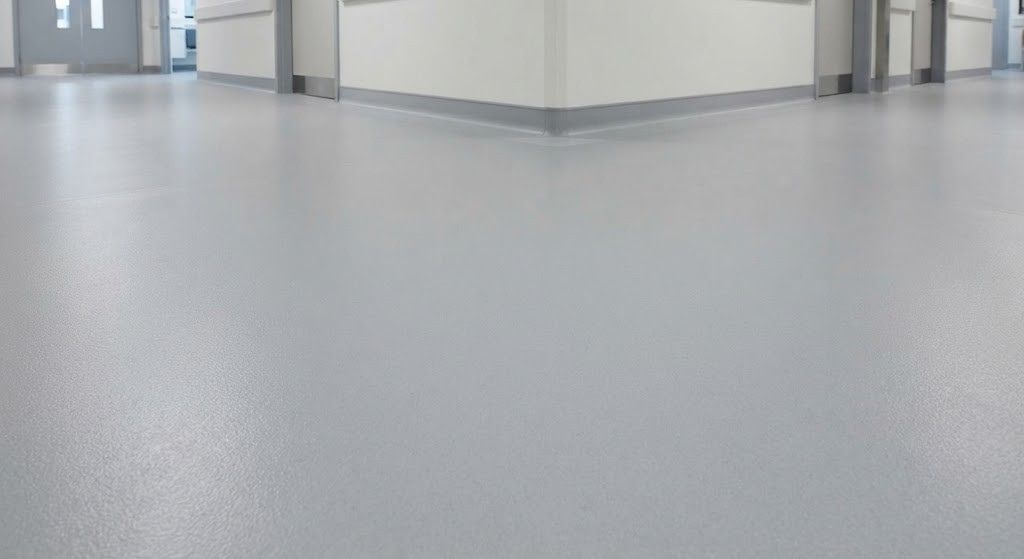
Repairing homogeneous vinyl sheet flooring requires experience, specialized tools and careful workmanship. Although a damaged area may seem easy to repair, incorrect repairs can result in visible seams, uneven surfaces or reduced durability.
Professional installers know how to remove damaged sections without affecting the surrounding flooring. They also understand how to prepare the surface properly, use the right adhesives and create strong, secure joints that maintain the floor’s performance.
Experienced flooring professionals also identify the cause of the damage before starting the repair. Understanding the original problem helps prevent similar damage in the future and supports the long-term performance of the flooring.
Many people believe that any visible flooring damage requires a complete replacement. However, this is not always true. The type, size and location of the damage are important factors in deciding the best solution.
Small scratches, localized cuts, minor burns and isolated damaged areas can often be repaired by trained flooring professionals. These repairs restore both the appearance and performance of the floor while helping avoid unnecessary replacement costs.
Repairing only the damaged area also reduces disruption to daily operations. This is especially beneficial for facilities that cannot afford extended downtime during flooring repair or renovation work.
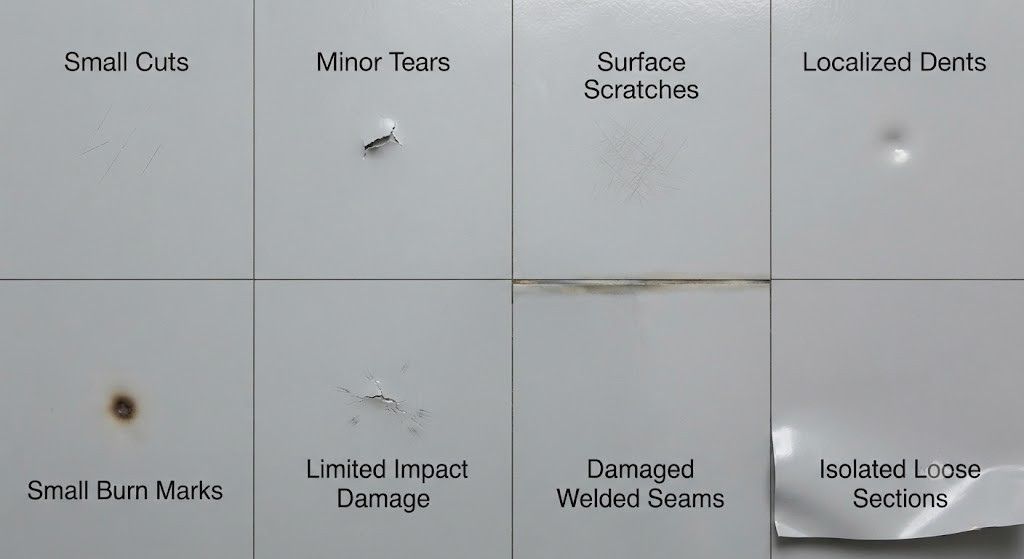
Several types of damage can often be repaired without replacing the entire floor.
These include:
The success of the repair depends on the severity of the damage and the condition of the surrounding flooring. A professional inspection helps determine the most suitable repair method.
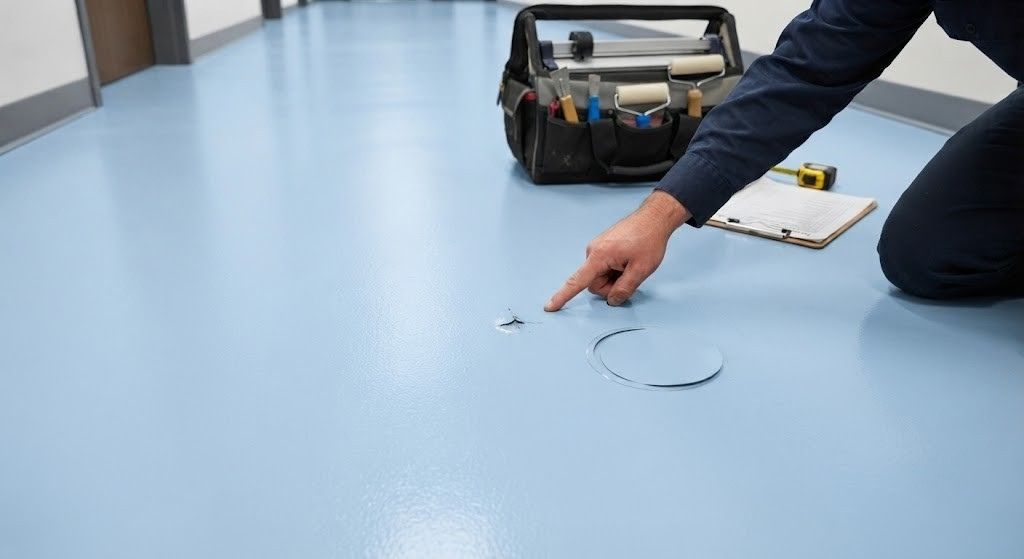
Professional repairs follow a careful process to achieve a clean and long-lasting result. The damaged area is first inspected to determine the extent of the damage and confirm that repair is the best solution.
If needed, the damaged section is carefully removed without affecting the surrounding flooring. A matching replacement piece is then cut to the correct size and securely installed using the proper adhesive and installation methods.
After installation, the seams are welded if required and the repaired area is cleaned thoroughly. When completed correctly, the repaired section blends naturally with the surrounding flooring and continues to deliver reliable performance.
Repairing damaged flooring offers several practical benefits for commercial facilities.
First, repairs usually cost less than replacing an entire room or a large section of flooring. Since only the damaged area requires materials and labor, repairs are often a more cost-effective solution.
Second, repairs are usually completed much faster than full replacement projects. This helps reduce downtime and allows facilities to continue normal operations with minimal disruption.
Finally, repairing flooring helps extend its overall service life. When damage is repaired early, the remaining flooring can continue to perform reliably for many more years.
Not every flooring problem can be repaired successfully. Several important factors should be considered before deciding on the best solution.
The size of the damaged area is one of the first things to evaluate. Small, localized damage is usually much easier to repair than damage that affects large sections of the floor.
The age of the flooring is also important. If the flooring has reached the end of its expected service life, replacing it may be a better option than carrying out repeated repairs.
The condition of the surrounding flooring should also be checked. If the rest of the floor remains in good condition, repairing the damaged area can provide a reliable long-term solution.
Repairs are often the best choice when damage is limited to one specific area instead of affecting the entire floor.
Facilities that experience accidental equipment impacts, furniture movement or isolated maintenance work can often benefit from localized repairs. Fixing these small problems early helps prevent them from becoming more serious over time.
Repairs are also a good option when it is important to keep daily operations running smoothly. Since only a small section of the floor is repaired, disruption is much lower than with a complete floor replacement.
Although repairs are a practical solution in many situations, there are times when replacing the flooring is the better long-term choice. One common example is extensive damage that affects a large area of the floor. When several sections need repair, the total cost and effort may be close to the cost of installing new flooring.
Another situation is when the subfloor is damaged. If moisture, structural movement or an uneven surface has affected the foundation beneath the flooring, repairing the vinyl alone will not fix the problem. The subfloor should be repaired first before installing new flooring.
Replacement is also recommended when the flooring no longer meets the facility’s performance requirements. If years of heavy use have reduced its overall condition, installing a new floor can improve safety, appearance and long-term performance.
Selecting between repair and replacement often depends on the overall project cost. Repairing a small damaged area usually requires fewer materials, less labor and less installation time, making it a more cost-effective solution for localized damage.
A complete replacement involves removing the existing flooring, preparing the subfloor, installing new flooring and allowing enough time for the adhesive to cure. These additional steps increase both the project cost and the installation time.
The best decision should consider more than the initial cost. A professional assessment helps determine which option provides the best value throughout the expected service life of the flooring.
Factor | Repair | Replacement |
Project Cost | Usually lower | Usually higher |
Installation Time | Faster | Longer |
Material Required | Small amount | Complete flooring material |
Business Disruption | Minimal | Greater |
Best For | Localized damage | Widespread damage or aging flooring |
Long-Term Solution | Suitable when surrounding floor is in good condition | Suitable when overall flooring condition has declined |
This comparison demonstrates that both repair and replacement have their own advantages depending on the condition of the flooring. Repair is often the most practical solution for localized damage, while replacement is more suitable when the flooring has extensive wear or has reached the end of its service life.
Proper care plays an important role in reducing the need for repairs and extending the service life of homogeneous vinyl sheet flooring. Regular maintenance helps preserve both its appearance and performance for many years.
These include:
These simple practices help facilities reduce maintenance costs while keeping the flooring in excellent condition throughout its service life.
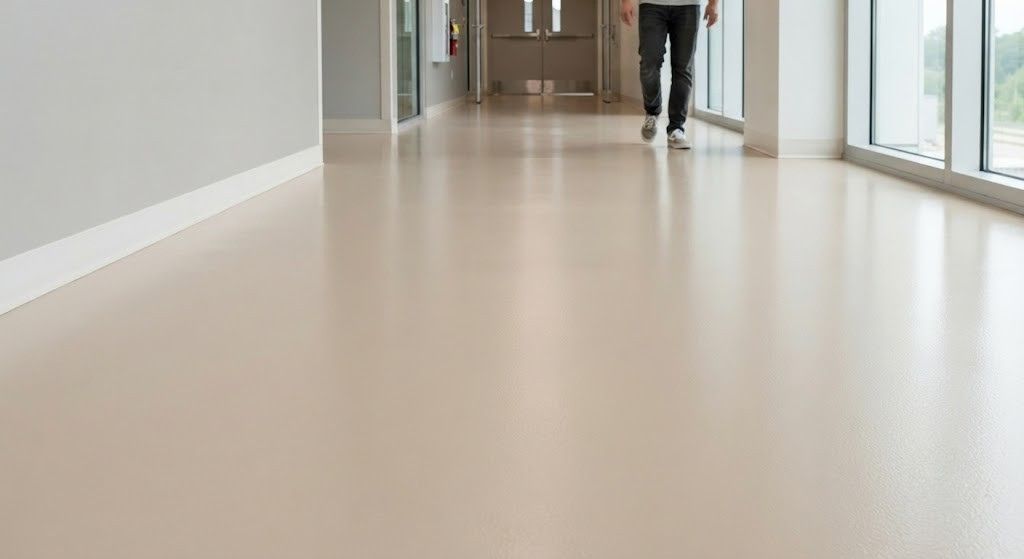
Homogeneous vinyl flooring can often be repaired instead of replaced when the damage is limited and the remaining floor is still in good condition. Its high-quality construction and durable design allow it to perform well with regular maintenance and reduce the need for frequent repairs. However, when damage occurs, specific areas can often be repaired without replacing the entire floor. If the damage is extensive, the flooring has reached the end of its service life or the subfloor has underlying problems, replacement may be the better long-term solution. A professional assessment helps identify the most suitable option, ensuring the flooring continues to provide reliable performance, durability and long-term value.
Longda Flooring is the largest homogeneous vinyl flooring manufacturer in China. When we are selling flooring to our customers, we usually ask our customers to buy some percentage more for the waste, cutting and repairing. Actually a good repairing will be also possible to make a good design & pattern on the flooring too to make it beautiful. It is the same cutting and installation & heat sealing.
Answer: Homogeneous vinyl sheet flooring cannot always be repaired, but it can be repaired in many situations when the damage is limited and the surrounding flooring remains in good condition. Since it is made from a single solid layer of vinyl with the same composition throughout its thickness, localized damage can often be repaired without affecting the rest of the installation. Professional repair methods can restore small cuts, scratches, burns, dents and damaged seams while maintaining the floor’s appearance and performance. The high-quality construction of homogeneous vinyl flooring allows it to perform well with regular maintenance, reducing the need for frequent repairs. However, repairs can still be carried out when accidental or localized damage occurs. If the damage is extensive, affects large areas or the flooring has reached the end of its service life, replacement may be the better long-term solution. A professional inspection helps determine the most suitable option and ensures the flooring continues to provide reliable performance and long-lasting value.
Answer: Many common types of damage can be repaired without replacing the entire flooring installation. Minor surface scratches, small cuts, localized tears, burn marks, dents caused by heavy equipment, damaged welded seams and isolated loose sections can often be restored by experienced flooring professionals. The repair method depends on the size, location and severity of the damage, but the main goal is to restore the flooring’s appearance, durability and functionality. Because homogeneous vinyl sheet flooring is made from high-quality materials, it can provide reliable performance for many years with regular maintenance. It does not usually require frequent repairs, but localized damage can be repaired when needed. Repairing damaged areas at an early stage also helps prevent small problems from becoming larger issues that may eventually require complete replacement.
Answer: In many situations, repairing homogeneous vinyl sheet flooring is more cost-effective than replacing it, especially when the damage is limited to a small area. Repair projects require fewer materials, less labor and much less installation time compared to removing and replacing an entire floor. This helps reduce project costs while minimizing disruption to daily operations, which is important for healthcare facilities, educational institutions, commercial buildings and industrial environments. Homogeneous vinyl flooring is designed with high-quality materials and excellent durability, so most facilities only require regular maintenance throughout its service life. If accidental damage occurs, the affected area can often be repaired, allowing the flooring to continue providing reliable performance without the cost of complete replacement. However, if repairs are needed frequently due to extensive damage or aging flooring, replacement may offer better long-term value.
Answer: The lifespan of homogeneous vinyl flooring can be extended significantly through proper maintenance, regular cleaning and timely repairs when needed. Dirt and abrasive particles should be removed regularly to reduce surface wear, while spills should be cleaned quickly to maintain the flooring’s condition. Heavy equipment should be moved carefully to prevent dents, cuts and impact damage. Regular inspections also help identify small problems before they become more serious and costly to repair. One of the key advantages of homogeneous vinyl sheet flooring is its high-quality construction, which allows it to perform well with routine maintenance instead of requiring frequent repairs. However, if localized damage occurs, it can often be repaired, helping facilities extend the flooring’s service life while maintaining its appearance and performance for many years.
Answer: A professional assessment is important because it helps determine the actual condition of the flooring before starting any repair work. Experienced flooring specialists inspect the damaged area, evaluate the surrounding flooring and identify any underlying issues, such as subfloor problems or moisture, that need to be addressed before repairs. They also recommend the most suitable repair method based on the size and severity of the damage, ensuring the repaired area continues to perform reliably over time. Although homogeneous vinyl sheet flooring is known for its excellent quality and usually requires only regular maintenance, it can be repaired when localized damage occurs. Professional repairs help restore the flooring’s appearance, maintain its durability, extend its service life and ensure reliable performance without unnecessary replacement.
Copy right by Longda China