
Choosing the right flooring solution is a critical decision for any commercial or industrial environment. Flooring not only impacts the overall look of an area but also plays a major role in durability, maintenance and long term performance. Today, businesses prefer flooring options that can withstand heavy usage, support hygiene standards and remain cost effective over time.
Homogeneous vinyl flooring and epoxy flooring are both widely used in different industries due to their strength and durability. However, homogeneous vinyl sheet flooring offers a more balanced and versatile solution because of its uniform structure, flexibility and long term performance benefits. Epoxy flooring is mainly appreciated for its hardness and strong chemical resistance, while homogeneous vinyl sheet flooring provides better comfort underfoot, simpler maintenance and a consistent appearance throughout the entire layer. Understanding these differences is important when choosing a flooring system that ensures practicality, durability and long term value.
In this blog, we will explain the main differences between homogeneous vinyl sheet flooring and epoxy flooring. We will also discuss why homogeneous vinyl flooring is considered a better and more practical option in modern environments.
Homogeneous vinyl flooring is a single layer flooring solution made from the same material throughout its entire thickness. This consistent composition ensures that the design and color remain uniform even after years of use. It is widely used in environments where durability and hygiene are essential.
This type of flooring is manufactured using high quality materials that offer strong resistance to wear and tear. Due to its uniform structure, it does not lose its appearance easily, even in high traffic areas. This makes it a reliable choice for long term performance.
In addition, another key feature is its flexibility. Homogeneous vinyl flooring can adjust to minor surface variations, which reduces the risk of cracks or damage over time. This flexibility further enhances its durability and overall performance.
Epoxy flooring is a surface coating created by applying a mixture of resin and hardener over a concrete base. Once applied, it forms a hard and glossy surface that is known for its strength and chemical resistance. It is commonly used in industrial spaces.
The installation process of epoxy flooring requires careful preparation of the base surface. Any moisture or unevenness in the concrete can affect the final result. This makes the installation process more sensitive and time consuming.
Although epoxy provides a strong surface initially, it can become brittle over time. Cracks and peeling may occur if the surface is exposed to heavy impact or structural movement. This can lead to additional maintenance requirements.
One of the biggest advantages of homogeneous vinyl is its flexibility. It can handle minor structural movements without cracking or breaking. This makes it suitable for environments where the floor may experience slight shifts.
Epoxy flooring is rigid by nature. It does not adjust well to movement in the underlying surface. Even small changes in the concrete base can lead to visible cracks on the surface.
This difference in flexibility plays a major role in long term performance. A flexible flooring solution reduces the risk of damage and extends the life of the floor.
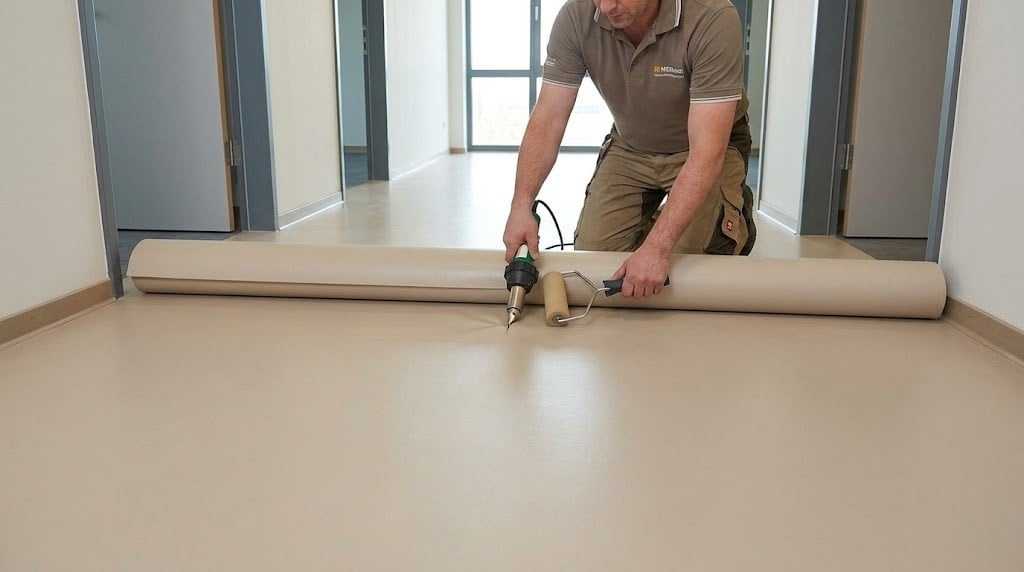
Homogeneous sheet vinyl is easy to maintain. Its smooth and non-porous surface prevents dirt and stains from penetrating deep into the material. Regular cleaning is usually sufficient to keep it in good condition.
It also supports high hygiene standards, making it suitable for environments where cleanliness is essential. The surface does not allow bacteria or dust to accumulate easily.
Epoxy flooring can also be cleaned without difficulty, but once it becomes scratched or damaged, dirt can settle into those areas. This makes cleaning more challenging and may require extra effort to maintain a clean appearance.
The installation of homogeneous vinyl flooring is relatively straightforward. It can be installed in a controlled manner with less dependency on environmental conditions. This helps ensure consistent results.
It also requires less downtime, which is important for businesses that cannot afford long interruptions. Faster installation leads to quicker project completion.
Epoxy flooring installation is more complex. It requires proper surface preparation, controlled temperature conditions and sufficient curing time. Any mistake during installation can affect the final outcome.
Before selecting a flooring system, it is important to understand how both options perform in real conditions. Homogeneous vinyl sheet flooring and epoxy flooring differ in structure, durability and long term maintenance requirements.
The below table demonstrates a clear and simple comparison to help in making a more practical and informed decision.
Feature | Homogeneous Vinyl Flooring | Epoxy Flooring |
Structure | Single layer material | Resin coating |
Durability | Long lasting | Can weaken over time |
Flexibility | High | Low |
Maintenance | Easy | Moderate |
Repair | Simple patch repair | Full resurfacing needed |
Comfort | Comfortable surface | Hard surface |
Cost Efficiency | Better long term value | Higher maintenance cost |
This comparison shows that homogeneous vinyl flooring offers more practical benefits for long term use. It is easier to maintain, more flexible and provides better overall comfort. Epoxy flooring is strong but requires more care and maintenance over time.
For most modern applications, homogeneous vinyl proves to be a more balanced and efficient choice.
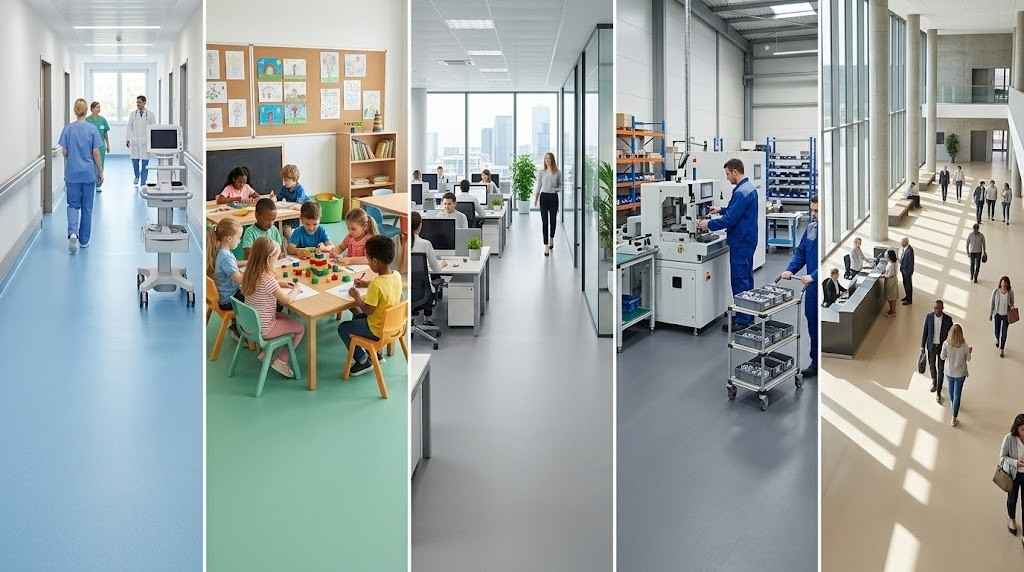
Homogeneous vinyl flooring is widely used in different environments due to its strong durability, flexibility and low maintenance requirements. It performs consistently in both low and high traffic areas, making it a practical flooring solution across many sectors.
Below are the main application areas explained in a clear and simple way:
Safety is an important factor when selecting flooring. Homogeneous vinyl flooring can be designed with slip resistant properties, reducing the risk of accidents. This makes it suitable for high traffic areas.
It also offers a comfortable walking surface, which is beneficial for people who spend long hours standing or moving.
Epoxy flooring can become slippery, especially when it is wet. Anti slip coatings can be applied, although they may wear off over time and reduce effectiveness.
Homogeneous vinyl sheet flooring is a cost efficient option in the long term. Its strong durability and low maintenance needs help reduce overall expenses. Businesses are not required to spend heavily on frequent repairs or replacements.
The initial investment can be similar to other flooring options. However, long term savings make it a more practical and economical choice. Reduced downtime during maintenance also improves overall cost efficiency for businesses.
Epoxy flooring may need repairs over time, especially when cracks or surface damage appear. These maintenance requirements can increase total expenses and raise the overall investment in the long run.
Homogeneous vinyl flooring is designed to deliver long lasting performance with minimal damage. Its uniform structure ensures that even with surface wear, the appearance remains consistent. This makes it a suitable option for areas with continuous foot traffic.
Epoxy flooring, on the other hand, may show signs of wear more clearly. Scratches, cracks, or surface damage can impact both its appearance and performance. Once damaged, repairs are often visible and may not blend smoothly with the existing surface.
Over time, homogeneous vinyl sheet flooring maintains its structural integrity better than epoxy flooring. This reduces the need for frequent repairs and provides a more stable and reliable flooring solution.
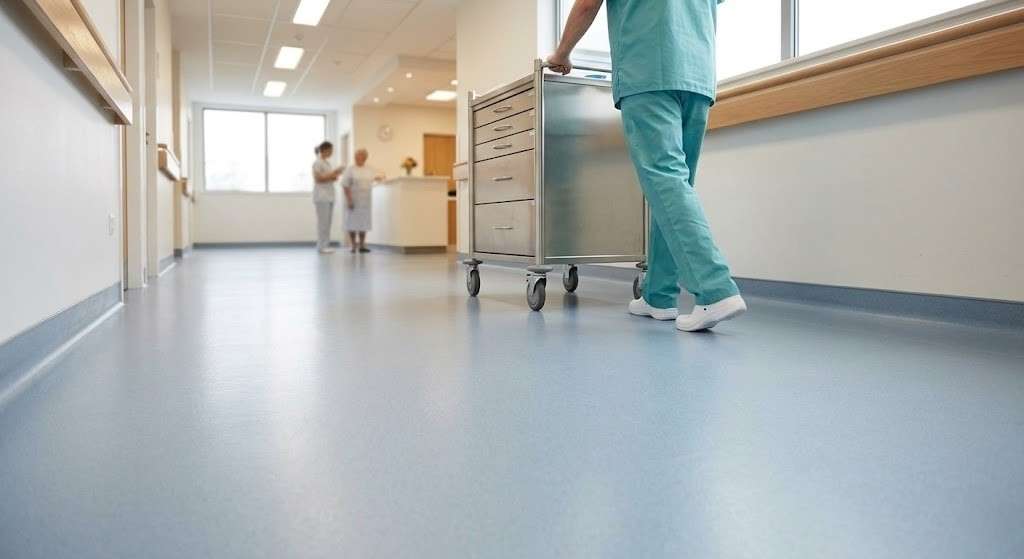
Homogeneous vinyl sheet flooring performs consistently well in areas where moisture is frequently present. Its surface structure prevents water from penetrating deeply, helping maintain long term stability.
This makes it suitable for environments that require regular cleaning or have constant damp conditions. The flooring does not easily lose its shape or strength when exposed to moisture.
Epoxy flooring also provides surface level water resistance, but cracks or surface damage can allow moisture to reach the base layer. This can reduce its long term durability over time.
Homogeneous vinyl flooring remains stable even when exposed to changing temperatures. It does not expand or shrink significantly, which helps maintain a smooth surface over time.
This stability ensures reliable performance in environments where temperature is not constant. The flooring maintains its original condition without creating structural stress.
Epoxy flooring is more sensitive to temperature variations, especially during installation. Extreme conditions can affect its bonding quality and reduce long term strength.
Homogeneous vinyl flooring helps reduce noise levels in busy environments. Its material structure absorbs sound better than harder surfaces. This creates a quieter and more comfortable environment, especially in offices, schools and healthcare spaces.
Epoxy flooring reflects sound more easily due to its hard surface. This can increase noise levels in active areas.
Homogeneous vinyl sheet flooring is easier to repair and maintain compared to many traditional flooring systems. It allows quick repairs without disturbing the entire surface, which helps reduce downtime in busy environments.
Its repair benefits include:
This makes it a practical choice for places where continuous activity is important. The flooring remains efficient and easy to manage even after long term use.
Homogeneous vinyl flooring offers a consistent design throughout its thickness. Even after years of use, the surface maintains a uniform appearance. This makes it a visually reliable option.
It is available in a wide range of colors and patterns, allowing businesses to select designs that suit their environment. The appearance remains stable over time.
Epoxy flooring provides a glossy finish initially, but it may lose its shine with wear. Surface damage can also affect its overall appearance, making it less consistent in the long run.
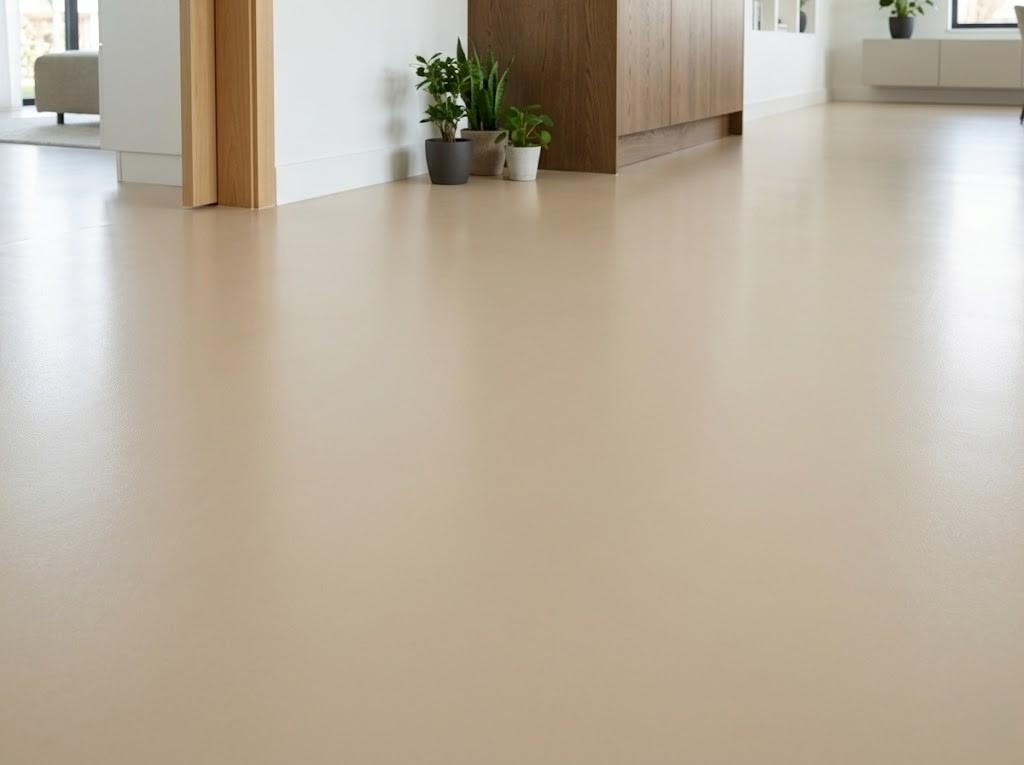
Homogeneous vinyl flooring and epoxy flooring both deliver strong performance, but they are suited to different environmental requirements. Epoxy flooring provides a hard and highly durable surface that performs well in certain industrial environments. However, it may become less dependable over time due to cracking issues and increased maintenance requirements. In contrast, homogeneous vinyl sheet flooring offers a more balanced option with greater flexibility, simple maintenance and better long term cost efficiency. It also ensures consistent performance across various conditions while supporting comfort and hygiene. For modern commercial and institutional environments, homogeneous vinyl is a more practical and reliable flooring solution.
Longda Flooring is the largest vinyl sheet flooring manufacturer in China. Homogeneous sheet vinyl is one of the key producs.
Homogeneous flooring is resilient, comfortable, antibacterial & fungicidal. Basically homogeneous flooring is more suitable for hospital, school and healthcare, but epoxy flooring is more suitable for industrial flooring such as workshop and parking center.
Answer: Homogeneous vinyl flooring is a single layer flooring material that is made from the same composition throughout its thickness, ensuring strong durability and a consistent appearance.
Answer: Yes, in most commercial and institutional environments, it is a better choice because of its flexibility, comfort and easy maintenance.
Answer: Homogeneous vinyl sheet flooring generally lasts longer in real use because it manages wear and movement more effectively.
Answer: Epoxy flooring is not difficult initially, but over time it may require more maintenance if cracks or surface damage appear.
Answer: It is commonly used in offices, hospitals, schools, and public buildings where strength and hygiene are important.
Copy right by Longda China